
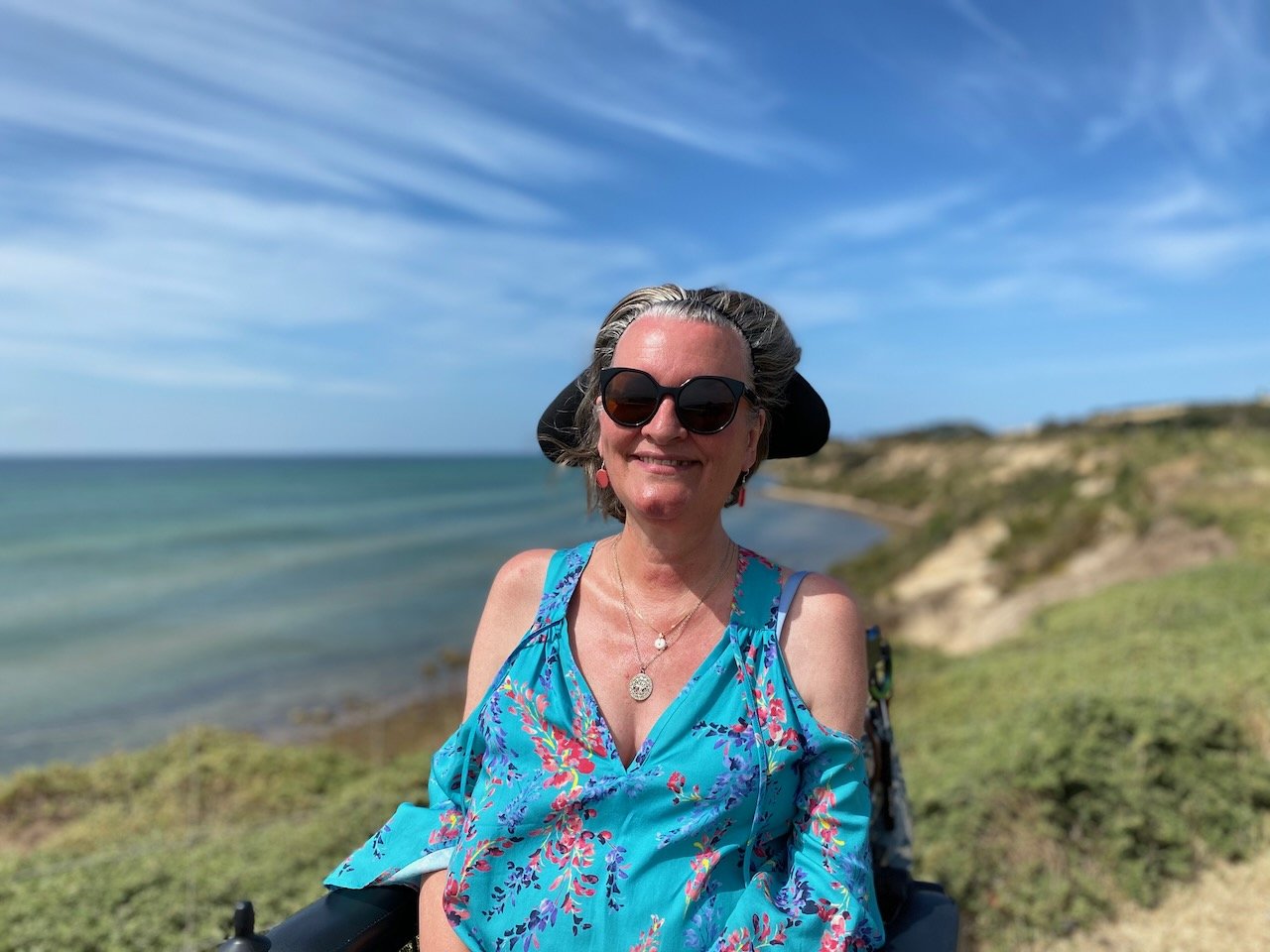


It's great to have you here.
For many of us, disability is a part of life. For every one of us, feeling included is how we thrive.
I was diagnosed with neuro muscular disease Limb Girdle Muscular Dystrophy at 40. Twenty years on I now rely on others for every part of daily life. On my journey, I have faced prejudice, ableism, and unnecessary difficulty. While my medical prognosis won’t change, I know my disabled life could.
I created this space to share the wins and challenges of travelling, socialising, playing and working in a world that is not yet designed for disability.
My personal blog, accessibility reviews, and radio show aim to dismantle misconceptions and spark dialogue to help us all - disabled or not - see disability not as a limitation, but as a vibrant part of life worth celebrating.
I would love for you to join me.

Ready to dive in?
Explore the blog, tune into Rolling Through Wednesday, and discover stories, resources, and insights that celebrate the beauty of inclusion and the power of community.
-

My Blog
Sharing inclusivity and accessibility as a disabled woman with Limb Girdle Muscular Dystrophy
-

My Podcast
Rolling Through Wednesday - stories, resources, and insights that celebrate the beauty of inclusion
-

Accessibility Reviews
Sharing and reviewing my accessible travels through a disability lens
-

Word Nerd
Exploring words or phrases related to disability, inclusion and accessibility
Recently on the blog
Follow my Journey


An equal and equitable Woman's and a Man’s World – The Ultimate Utopia.
My musings inspired by IWD 2025 and the world around us.
I was surprised recently to learn that If you have a disability and use a wheelchair or similar mobility device and use a modified vehicle you may be eligible for a 100% discount on your annual vehicle registration fee. This is my latest bureaucratic Journey.
In some way’s it's never been easier to have a disability than in the 21st century. In most ways of course, there is never a good time to have a disability, but when technology and equipment are made available for the use of people with disability,…
The principles of an inter-abled friendship are similar to any great friendship, they can take a bit more work depending on your disability journey. Yet there can be differences…
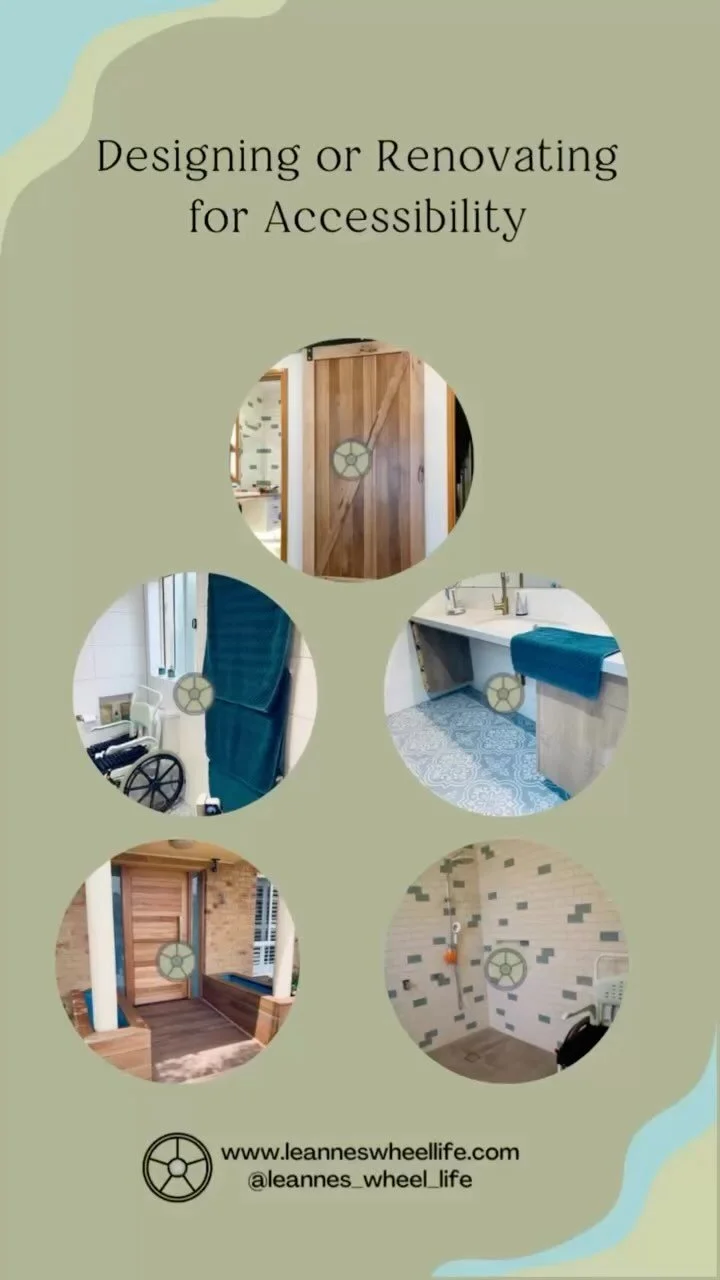
Comfortable, safe and beautiful accessible design in a home is just as important to disabled me as it was in my pre-muscular dystrophy days. I’ve enjoyed designing and creating my inclusive home.
Good, honest friendship should never involve a power imbalance, or where one side isn’t feeling joy from the relationship. This might happen in a relationship in which each experiences life quite differently, such as through the lens of disability.
This must-see documentary called Crip Camp provides compelling insight into the American civil rights movement as it relates to people with disabilities, which influenced the birth of Australia's disability discrimination laws.
Accessible car parking bays used by eligible permit holders should mean equitable access for everyone to go about their lives. But there are associated unhelpful, and unwelcome, social and systemic side effects.
Do you think about grace when you get dressed, reach for your coffee or eat? Have you considered the role dignity plays in your moves? Over the last 10 years I certainly have.
For some time, I’ve wanted to write about my experience as a participant of our National Disability Insurance Scheme (NDIS)). If I had shared my views in 2019, twelve months after I started on the scheme, I would've been full of praise.
Pre-election, former Australian Prime Minister, Scott Morrison made his now infamous and controversial ‘blessed to have non-disabled children’ statement. I’m a disabled woman. But I get it.I might have said something similar 30 years ago as an able-bodied woman.
Whether you are in retail or hospitality finance or construction, there are many compelling reasons why you should be actively hiring people with disability. And in these post-pandemic times, with less available Visa workers, this is more pertinent than ever.
Eventually, I realised that I wasn’t sharing everyday experiences in the same way as I used to with my friends and family, I was entering a community previously unknown to me. The disability community and all the inequities that comes with it.
Necessity has driven humankind to strategise, design, create and innovate. This need has resulted in contributions, both beneficial, and at times detrimental because we have always strived for ways to fulfil a real or perceived need.
I didn’t always fly, drive and travel with a disability. I took the ease of the booking and travel process very much for granted until Limb-Girdle Muscular Dystrophy (LGMD) forced me to reconsider how I travel, where I travel, and whether travelling was actually worth the effort, in an ablest world where processes, planes and accommodation is very rarely designed for disability.
Enjoying an outing today are we? This was a question I was asked when at my local garden centre recently. One small comment but one huge indictment on society’s perceptions of disability.
For better, for worse. For richer, for poorer, in sickness and in health…I said this to Leanne more than 30 years ago; I meant it then and I mean it now. Plenty of us have said these words, and I bet few of us really thought about what they meant. Few of us really could.
Caring for someone in a physically or mentally vulnerable situation can at times be a more draining, compromising and lonely experience than their afflicted charges bear. Our disabled are marginalised, and our carers are seriously overlooked. I discuss how we can all help the support people around us.
My life would be so unimaginably 'less than' without my wonderful, supportive, unpaid carer AKA my husband, Gaz. And like millions of unpaid and loving carers around the world he doesn't question his role because he's that kinda guy and we have always been a team.
I saw buying my first wheelchair as a pragmatic choice, thinking of my safety, the convenience of those around me and my quality of life; but looking back now, I was not in touch with my true emotions and was harbouring a generous amount of resentment and sadness towards my situation.
Revelatory experiences come in all shapes and sizes and mine came in the form of a five-day stay on one of Australia’s tropical treasures - Hamilton Island. The peaceful, palm-filled hilly mound is a tiny part of the island enclave known as the Whitsundays in North Queensland.
My epiphany was:
‘I am – undeniably – physically disabled.’
In the winter of 2016 Gaz and I became the owners of a Kia Carnival. Not our empty ester vehicle of choice but you can’t have everything. In spring of that year I became the wheelchair-using passenger in the newly accessibly modified Kia Carnival.
The independence brought by being in the driver’s seat is generally unspoken. So what happens when the ability to drive is no longer or has never been available to you due to circumstances out of your control, your disability?
Acquiring the symptoms of a progressive condition takes some getting used to but why do so many of us feel the need to cloak these changes in an ugly cape of lies (to ourselves and others), excuses and denial? Why do we cling to the old normalcy so frantically? And what harm are we doing to ourselves in the process?.
When I talk to people about my condition the most common questions that I receive are related to confusion between other neurological disorders that symptomatically seem to present similarly, their acronym is very similar and the conditions are, generally, more familiar to more people.
Imagine a situation where the involuntary action of rising from a seated position is no longer available to you. Your resultant reliance on others for every activity involving repositioning is now essentially absolute.
This happened to me very suddenly and very recently, and it has made me think a lot about our lives and who we really are – outside of our physical beings.
Everyone loves it when the mailman arrives – sometimes more than others
There was a time when If I cried “catch me, I’m falling”, it was not because my company had induced a swoon. This isn’t a pass; it is the unfortunate effect of having LGMD. While my ambulatory skills were diminishing, getting up from the ground was one of the first abilities to disappear along with my butt, hip and thigh muscles.
Back in 2015 I’m sure a local Aussie Post delivery worker was happy to know I wasn’t trying out the damsel in distress routine to gain his attentions when he found me soaking up the rays on my friends front lawn one fine sunny day.
As a newbie to this wheelchair game, I was feeling a little reticent and self-conscious about using a beach wheelchair during our recent visit to Noosa in beautiful Queensland. It really had been ages since feeling sand and water under my feet and why else would we be at this Aussie iconic beach destination (apart from food and champagne of course, but I can get that in Melbourne)?.
We tracked the wheelchair down at a nearby hotel, and for a mere gold coin donation this rubber-wheeled jalopy was ours and I was on the pathway to salty watery freedom with a small dose of terror.
When is it time to decide that walking everywhere is no longer a viable option and using a wheelchair is?